
French Drains in North Bay & Powassan
Professional French drain installation to solve water drainage problems across Northern Ontario. From soggy yards to wet basements, we design and install drainage systems that redirect water away from where it causes damage — backed by 35 years of experience and full WSIB insurance.
Martin Services installs French drain systems for residential and commercial properties across Powassan, North Bay, Callander, Astorville, East Ferris, and surrounding communities in Northern Ontario. If you're dealing with standing water in your yard, a wet basement, water pooling against your foundation, or soggy lawn areas that never seem to dry out, a French drain is likely the solution. We assess your drainage problems, design the right system, and install it properly — with correct slope, geotextile fabric, and a proper outlet so water goes where it should.
Northern Ontario's clay-heavy soils, spring snowmelt, and heavy rainfall events make drainage problems especially common — and especially damaging. Water that sits against your foundation freezes and expands, cracking concrete and causing leaks. Water that pools in your yard kills grass, creates mosquito breeding grounds, and turns walkways into ice rinks in winter. A properly installed French drain solves these problems permanently.
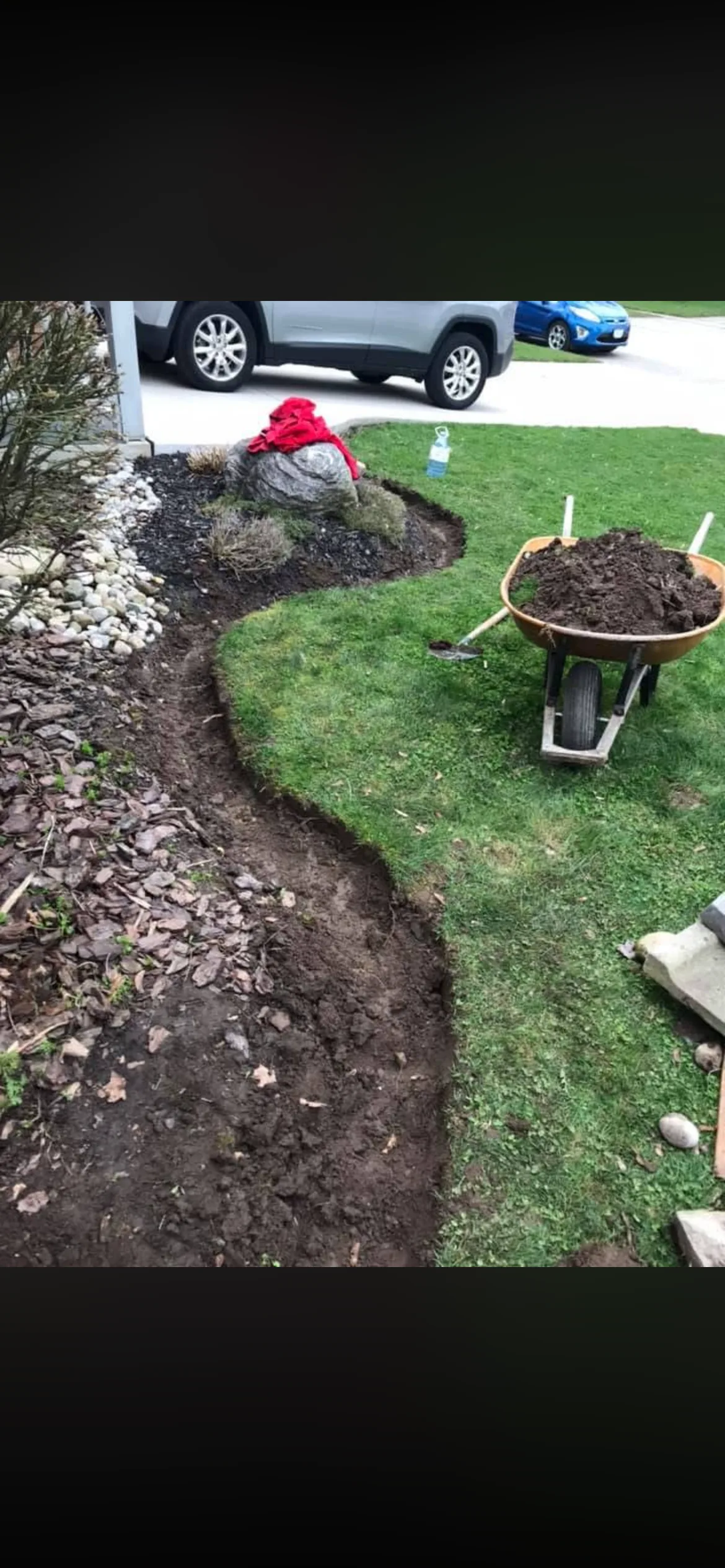
Signs You Need a French Drain
Water problems don't fix themselves — they get worse. Here's what to watch for on your property.
Standing Water in Yard
Puddles that linger for days after rain or snowmelt — a sign that water has nowhere to go and your soil can't absorb it fast enough.
Wet Basement
Moisture, dampness, or active water seeping through your basement walls or floor — a foundation drainage problem that causes mold and structural damage.
Water Pooling at Foundation
Water collecting against your home's foundation after rain — grading issues that can lead to basement flooding and foundation cracking from freeze-thaw cycles.
Soggy Lawn & Ice Buildup
Lawn areas that stay perpetually wet and spongy, or that turn into dangerous ice sheets in winter — classic signs of poor subsurface drainage.
How We Install French Drains
Consultation
We visit your property to understand the water problem, identify the source, and discuss the best solution.
Drainage Assessment
Mapping water flow patterns, measuring grades, and identifying the optimal drain route and outlet location.
Trench Layout & Excavation
Marking the trench path, calling for utility locates, and excavating to proper depth with correct slope.
Geotextile Fabric
Lining the trench with filter fabric to prevent soil from migrating into the gravel and clogging the system.
Perforated Pipe & Gravel
Setting the perforated pipe on a gravel bed, then surrounding it with clear drainage gravel and wrapping the fabric.
Grading & Backfill
Backfilling the trench, compacting in lifts, and grading the surface to direct surface water toward the drain.
Surface Restoration
Restoring the lawn, garden beds, or hardscape over the drain so your property looks better than before.
Where We Install French Drains
French drains solve drainage problems in many different situations. Here are the most common applications we handle.
Foundation Drainage
Perimeter drains around your home's foundation to intercept groundwater before it reaches your basement walls. The most critical drainage application for protecting your home.
Yard & Lawn Drainage
Subsurface drains through soggy lawn areas to collect and redirect water to a proper outlet. Eliminates standing water, mosquito breeding, and winter ice hazards.
Downspout & Driveway Diversion
Connecting roof downspouts and driveway runoff to underground drainage that carries water away from your foundation and off your property.
Retaining Wall & Garden Bed Drainage
French drains behind retaining walls to relieve hydrostatic pressure, and in garden beds to prevent root rot and waterlogged soil.
Why Proper Installation Makes All the Difference
The concept of a French drain is simple — a trench with gravel and perforated pipe that collects and redirects water. But the execution matters enormously. We see a lot of failed French drains in our service area, and the problems are almost always the same: not enough slope, missing filter fabric, or no proper outlet.
A French drain needs a minimum 1% slope (about 1 inch of drop per 8 feet) to move water by gravity. Without geotextile fabric, Northern Ontario's clay soils will migrate into the gravel and clog the system within a few years. And without a proper daylight outlet or connection to storm drainage, the water has nowhere to go. We get all three right on every installation.
Every Installation Includes
- 4" perforated pipe — commercial-grade, properly sloped to outlet
- Geotextile filter fabric — prevents clay soil from clogging gravel
- Clear drainage gravel — washed stone for maximum water flow
- Proper outlet — daylit to grade or connected to storm system
French Drain FAQs
Got questions about French drains? Here are the ones we hear most. Can't find your answer? Call us at (249) 506-9211.
What's the difference between a French drain and weeping tile?
They're essentially the same concept — a perforated pipe surrounded by gravel that collects and redirects groundwater. "Weeping tile" is the traditional Canadian term, while "French drain" is the modern term. The main distinction is application: weeping tile typically refers to foundation drainage, French drain to yard drainage. We install both. Call (249) 506-9211.
How much does a French drain cost?
French drain costs in the Powassan and North Bay area range from $30 to $65 per linear foot for exterior installations. A typical 50-foot residential drain runs $1,500 to $3,500. Foundation perimeter systems range from $5,000 to $15,000. Every project includes geotextile fabric and surface restoration. Call (249) 506-9211 for a free estimate.
How deep should a French drain be?
Most yard French drains are 18 to 24 inches deep — deep enough to intercept groundwater while staying above utility lines. Foundation drains are installed at footing depth (4 to 6 feet). The drain must maintain minimum 1% slope (1 inch per 8 feet) so water flows by gravity. We determine the right depth during our drainage assessment.
Does a French drain need maintenance?
A properly installed French drain with geotextile fabric requires minimal maintenance. We recommend checking the outlet point annually to ensure it's clear. Drains installed without filter fabric (common with older or DIY installations) may clog with sediment and need replacement. Our installations are designed to last 25 to 50 years.
Does a French drain freeze in winter?
We install yard drains at minimum 18 inches deep to avoid surface frost issues. Foundation drains at footing depth are well below the frost line and work through winter. The gravel provides insulation, and proper slope ensures water drains before it can freeze. Our systems are designed for Northern Ontario conditions.
Should I DIY or hire a professional?
While a simple yard drain is technically DIY-able, we see a lot of failed installations — usually from incorrect slope, missing filter fabric, or undersized pipe. For foundation drainage, professional installation is strongly recommended since incorrect work can worsen water problems. Call (249) 506-9211 for a free assessment.
More Landscaping & Design-Build
Explore other services under our Landscaping & Design-Build umbrella.
Water Problems? We'll Fix the Drainage.
Free estimates on every project. Whether it's a soggy yard, a wet basement, or water pooling against your foundation, give us a call. We'll assess the problem and design a drainage solution that works — permanently.