
Lawn Aeration & Dethatching in North Bay & Powassan
Northern Ontario's clay-heavy soils compact fast and thatch builds up thick. Core aeration and power dethatching open up your lawn so water, air, and nutrients actually reach the roots — the single best thing you can do for a tired lawn.
Martin Services provides professional core aeration and power dethatching for residential and commercial lawns across North Bay, Powassan, Callander, Astorville, and surrounding communities in Northern Ontario. If your lawn feels spongy underfoot, water pools on the surface instead of soaking in, or the grass looks thin and tired despite regular watering and fertilizing, compacted soil or excess thatch is almost certainly the problem. Our aeration and dethatching services break through both barriers so your lawn can actually breathe, drink, and feed the way it's supposed to.
The soil across the Powassan, North Bay, and Lake Nipissing region is predominantly clay-based — a legacy of the glacial Lake Algonquin that once covered this area. Clay soil has tiny particles that pack together tightly, especially after a Northern Ontario winter. Months of snow load, repeated freeze-thaw cycles, and spring melt water all compact the soil further. By the time June rolls around, the top 2 to 3 inches of soil on many properties are nearly impenetrable to water and air.
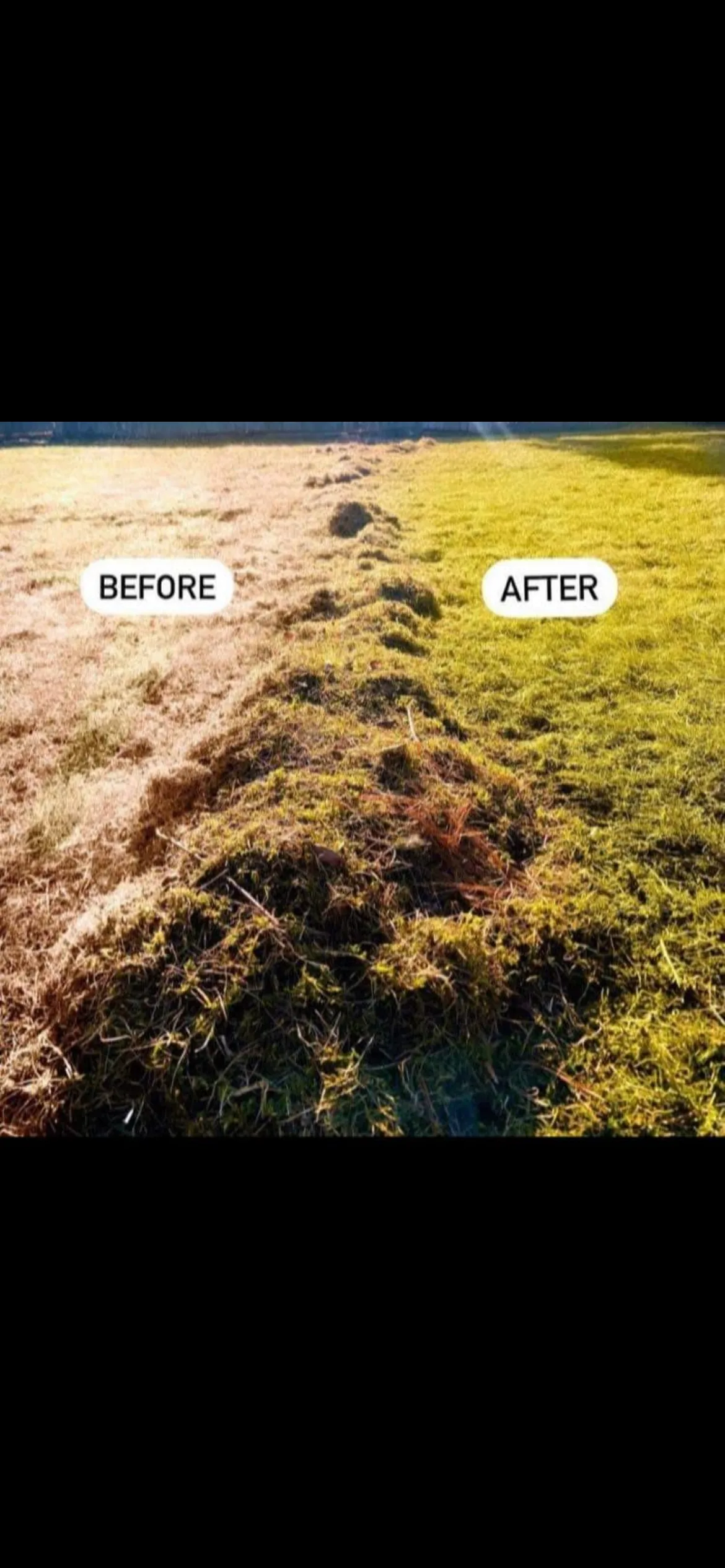
Why Aeration Is Essential on Northern Ontario Soils
Compacted soil and thick thatch silently starve your lawn. Here's what happens when you ignore them.
Shallow Root Systems
When soil is compacted, grass roots can't grow deeper than an inch or two. Shallow roots mean the lawn dries out faster during hot stretches in July, recovers poorly from foot traffic, and can't compete with weeds that have deeper, more aggressive root systems.
Water Runoff & Waste
Water runs off compacted soil surface instead of soaking in, which wastes your time if you're watering manually and starves the grass even when it rains.
Thatch Traps Disease
Thick thatch acts like a sponge that sits on top of the soil. It absorbs water and fertilizer before they can reach the root zone and harbours fungal diseases like snow mould, which is already a persistent problem in the North Bay region's long winters.
Winter Kill Vulnerability
Grass roots growing into the thatch layer instead of the soil makes the lawn extremely vulnerable to drought, heat stress, and winter kill — all common issues in Northern Ontario's climate.
What's Included in Our Service
Lawn Assessment
We check thatch depth and soil compaction before recommending aeration, dethatching, or both.
Core Aeration
Full-property pass with a commercial core aerator, pulling plugs 2-3 inches deep on 3-4 inch centres.
Power Dethatching
When needed — mechanical removal of excess thatch with a power rake, debris collected and removed.
Overseeding (Optional)
Premium seed broadcast immediately after aeration for maximum germination rates.
Complete Cleanup
Thatch debris removed from the property; aeration cores left in place to decompose naturally.
Understanding Thatch and Why Dethatching Matters
Thatch is the layer of dead grass stems, roots, and organic debris between the green blades and the soil surface. Here's what you need to know.
Thin Thatch Is Good
A thin layer (under half an inch) is actually beneficial — it insulates roots from temperature extremes and helps retain soil moisture during Northern Ontario's hot summer days.
Thick Thatch Is a Problem
When thatch exceeds half an inch, it absorbs water and fertilizer before they can reach the root zone, creating a shallow environment where grass roots grow into the thatch layer instead of the soil.
Power Raking Removes It
Power dethatching (also called power raking) uses a machine with spinning vertical blades to cut through and pull up the excess thatch layer. It's a more aggressive process than aeration, so we only recommend it when buildup is significant.
Aeration Prevents Buildup
For lawns with moderate thatch, regular core aeration combined with mulch-mowing is often enough to keep it in check over time. The cores break down thatch as they dissolve into the lawn surface.
When to Schedule Aeration and Dethatching
The ideal time for aeration in the North Bay and Powassan area is early to mid-September. The soil is still warm from summer, air temperatures are cooling, and fall rain provides natural irrigation for recovery. Spring aeration (late May to early June) is the second-best option — just make sure the ground has fully thawed and dried enough to support the aerator without creating ruts or compacting wet soil further.
For the best results, we recommend combining fall aeration with overseeding. The aeration holes create perfect seed-to-soil contact, dramatically improving germination rates compared to surface-broadcast seed. It's the most cost-effective lawn renovation technique available, and the results show up strong the following spring.
Aeration Schedule at a Glance
- Early–mid September — Best window, warm soil + cool air + fall rain
- Late May–early June — Second-best, after full thaw and dry-down
- Dethatching — Early fall or early spring when grass is actively growing
- Frequency — Annual for clay soils; twice/year for heavy traffic
Aeration & Dethatching FAQs
Got questions about aeration or dethatching? Here are the ones we hear most. Can't find your answer? Call us at (249) 506-9211.
When is the best time to aerate a lawn in Northern Ontario?
The best time for core aeration in the North Bay and Powassan area is early to mid-September. Fall aeration takes advantage of warm soil, cool air temperatures, and autumn rain — ideal conditions for grass roots to recover and expand into the newly opened channels. Spring aeration (late May to early June) is the second-best option, but you need to wait until the ground has fully thawed and dried enough to support the aerator without creating ruts. Avoid aerating during the hot, dry stretch in July and August when the lawn is already under stress.
What is the difference between aeration and dethatching?
Aeration and dethatching solve two different problems. Core aeration pulls small plugs of soil out of the ground to relieve compaction — especially important on the clay-heavy soils common around North Bay and Powassan. It allows water, air, and nutrients to reach the root zone. Dethatching (also called power raking) removes the layer of dead grass, roots, and organic debris that builds up between the green grass blades and the soil surface. A thin layer of thatch (under half an inch) is fine, but anything thicker blocks water and fertilizer from reaching the soil. Many lawns in Northern Ontario benefit from both services done together.
How often should I aerate my lawn near North Bay?
For most residential lawns in the North Bay region, annual aeration is recommended — especially if you have clay-heavy soil, which compacts more readily than sandy or loamy soils. Properties with heavy foot traffic, kids playing, or vehicles parking on the grass may benefit from aerating twice per year (spring and fall). Newer lawns on subdivisions where the topsoil was compacted during construction should be aerated annually for the first 3 to 5 years to help the root zone develop properly.
Will aeration make my lawn look messy with all those soil plugs?
Yes, temporarily. After core aeration, small plugs of soil (about 2 to 3 inches long) will be scattered across your lawn. They look a bit rough for a few days, but they break down naturally within 1 to 2 weeks — faster if it rains or you water. We recommend leaving the plugs in place rather than raking them up. As they dissolve, they redistribute soil and organic matter back into the lawn surface, which actually helps break down thatch over time.
Should I overseed after aerating my lawn?
Absolutely — fall aeration followed by overseeding is one of the most effective things you can do for a Northern Ontario lawn. The aeration holes create perfect seed-to-soil contact, which dramatically improves germination rates compared to broadcasting seed over a non-aerated surface. If your lawn is thin, patchy, or showing its age, combining aeration with overseeding in September gives the new grass the best chance to establish before winter. Martin Services can do both in a single visit. Call (249) 506-9211.
Other Lawn Care Services
Aeration works best as part of a complete lawn care program. See what else we offer.
Ready to Let Your Lawn Breathe?
Free estimates on aeration and dethatching. We'll assess your thatch depth and soil compaction, then give you a clear recommendation and price — no pressure.